What the schedules are
The U.S. Drug Enforcement Administration (DEA) classifies controlled substances into five schedules based on their medical use and potential for misuse. Drug Tracking uses these same schedules to organize and track your medications.
The five schedules
Schedule I (C-I)
Substances with no currently accepted medical use in the United States and a high potential for misuse. You will rarely see C-I drugs in an EMS formulary.
Schedule II (C-II)
High potential for misuse but with accepted medical uses. These are the most closely tracked drugs in your inventory. Examples: Fentanyl, Morphine, Ketamine (reclassified in some states).
Schedule III (C-III)
Moderate potential for misuse. Examples: Ketamine (federal classification), Testosterone.
Schedule IV (C-IV)
Lower potential for misuse. Examples: Midazolam (Versed), Diazepam (Valium), Lorazepam (Ativan).
Schedule V (C-V)
Lowest potential for misuse among controlled substances. Examples: certain cough preparations with small amounts of codeine.
How schedules appear in Drug Tracking
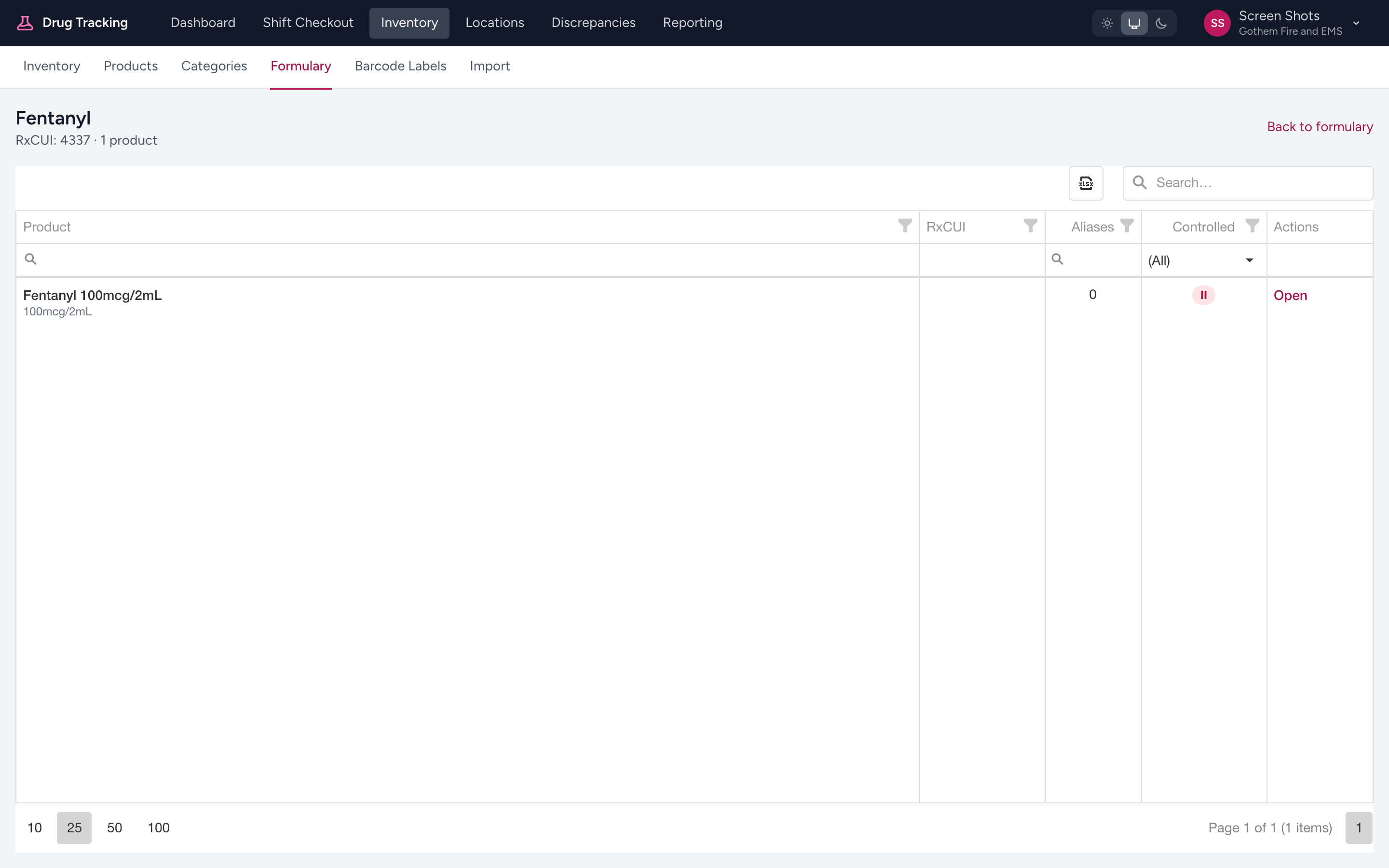
Throughout the app, controlled substances are marked with their schedule abbreviation: C-II, C-III, and so on. You will see these labels in the formulary and during checkouts, and controlled rows are highlighted on the Discrepancies page. Non-controlled drugs do not have a schedule label.
Why this matters for your work
Higher-schedule drugs (especially C-II) require stricter documentation. During checkouts, these items get extra attention because discrepancies must be explained and documented thoroughly. Their full history is captured through checkouts, and agency-wide reporting is available in the Analytics app.
Tip
If you are unsure which schedule a drug falls under, check the formulary. The schedule is listed right on the drug's detail page. When in doubt, treat any drug with a schedule label as requiring careful documentation during your checkout.